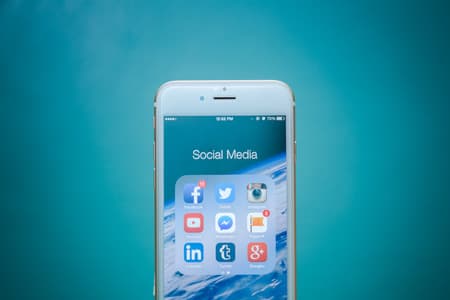
Proven, revenue-focused tactics to drive registrations, ticket sales, and measured ROI for US-based events using paid media and tracking best practices.

Image via 123RF
Fill out the form below and our team will get back to you within 24 hours
Discover what makes us different
Meta Business Partner running paid social across every major platform.
Audience targeting that reaches actual buyers, not just cheap impressions.
Clients see up to 45% lower cost per lead after we restructure their accounts.
In-house creative paired with reporting that proves what each rand returned.
Here's what sets us apart from the competition
Find answers to common questions
Implement server-side event collection, consistent UTM tagging, cross-domain tracking and order-level reconciliation to match platform events with backend purchase records, then use cohort reconciliation to surface persistent attribution differences.
Run structured A/B tests that isolate creative from audience, use defined learning windows to identify top performers, and promote winning creatives into scaled funnels while monitoring conversion metrics and unit economics rather than engagement alone.
Start with hypothesis-driven test budgets, scale incrementally for ad sets that meet your CAC and margin targets, reallocate spend toward channels that improve MER, and continuously optimize bids and audiences to preserve unit economics.
Combine server-side tracking (GTM server or conversion APIs), GA4 ecommerce measurement, stable UTM parameters and backend order ingestion so ad events map to purchases; apply multi-touch or data-driven attribution and evaluate performance against MER and LTV.
When integrated with CRO, retention strategies, LTV measurement and accurate attribution, social media ads can feed a scalable growth system that acquires customers at sustainable CAC and supports long-term profitability rather than one-off sales.
In This Article
Funnel-aligned channels
Measurement-first setup
Scale with evidence
Event promotion succeeds when audience targeting, creative, and tracking align toward measurable outcomes: registrations, paid tickets, or qualified leads. This guide on top digital advertising strategies for event promotion focuses on revenue-first decisions-reducing cost per registrant and improving attribution accuracy using US ad platforms like Google Ads, Meta, TikTok, and LinkedIn.
Start with explicit outcomes ($ revenue per ticket, target CAC, or qualified lead thresholds). Map ad activity to the funnel stages below so each channel has a clear role.
Top digital advertising strategies for event promotion rely on mixing channels to cover the funnel. Use Google Ads for intent and retargeting, Meta and TikTok for scale and creative testing, and LinkedIn for B2B or high-ticket events. Align budgets by expected CAC and audience quality.
| Channel | Best funnel role | Primary tactic |
|---|---|---|
| Google Search & Performance Max | BOF / MOF | Intent-targeted search, retargeting, conversion-focused asset groups |
| Meta (Facebook & Instagram) | TOF / MOF | Video awareness, lead forms, event response with retargeting |
| TikTok | TOF / MOF | Short-form creative testing, lookalikes, influencer amplification |
| TOF / BOF (B2B) | Sponsored content, InMail leads, account-targeted campaigns |
Test 3-5 creative concepts per campaign: hero-value (what they gain), social proof (past attendees), urgency (early-bird pricing), and format-specific cuts (15s, 30s, carousel). For ticketed events, lead with price or exclusive benefits; for free events, lead with clear next-step and value exchange.
Quick note: align creative to the funnel-don’t use hard-sell copy for TOF placements. Use storytelling or problem-led hooks in top-funnel and direct CTAs in BOF.
Accurate measurement is critical for event promotion. Implement GA4, server-side tracking, and platform pixels to reconcile platform-reported conversions with on-site outcomes. For ticket sales, attribute by revenue and track refund/cancellation events to measure true LTV.
Use a simple conversion tracking diagram to map events from ad click to registration:
| Step | Event | Tracking point |
|---|---|---|
| Ad click | gclid/fbclid/tiktok click | UTM + click IDs |
| Landing page | Form view / ticket select | Client-side + server-side events |
| Transaction | Purchase / registration | Order ID, revenue sent server-side |
If you want a reference for full-service implementation, see our services overview at Services Overview.
Events targeting US audiences must consider cookie consent for client-side pixels and CCPA opt-out requirements for California residents. Prefer server-side tracking to reduce data loss and to maintain cleaner attribution while respecting consent signals.
For organizational background on measurement frameworks, see the Prebo Digital homepage for our approach to analytics and attribution: Prebo Digital.
Run structured experiments: single-variable creative tests, audience tests, and landing page variants. Early budgets should prioritize learning (broad reach, creative variants); once CPAs hit target ranges, shift to scaling with lookalikes and automated bidding.
Allocate initial spend across funnel stages (example for a $10,000 pre-event budget):
Adjust allocation by observed conversion rates. If you see a $20 cost per lead at BOF that converts at 10% to paid tickets, calculate expected CAC and scale accordingly. Example: if average ticket value is $150 and expected conversion from lead to ticket is 10%, your effective CAC target should be below $15 to remain profitable-these are illustrative estimates for US events and will vary by vertical.
Optimize landing pages for speed and clarity-single-column flows, clear benefits, and a friction-minimised registration form. Use marketing automation (email + SMS) to reduce no-shows and increase upsell conversion. An automated confirmation series plus a reminder sequence reduces churn and improves realized revenue per registrant.
| Funnel Stage | Primary KPI | Target (example) |
|---|---|---|
| TOF | CPM, view-through rate | $10-$25 CPM (varies by channel) |
| MOF | Landing page leads, video completions | Lead rate 2-8% (depends on offer) |
| BOF | Registrations, revenue | CPA <$50 for free events; targets vary for paid events |
Scale when: stable CPAs across 7-14 days, consistent creative winners, and adequate audience saturation tests. Weekly reporting should include revenue-attributed metrics (not just platform conversions) and a reconciliation between platform and server-side results.
For agency process and long-term growth retainers that cover strategy, build, testing, scale, and reporting, review our approach on the About page: About Prebo Digital. If you need a tailored audit of your event funnel, consider requesting a diagnostic via the contact page: Contact.
Explore the framework and see a real-world example to adapt these top digital advertising strategies for event promotion to your next US-based event.
Here's what sets us apart
Don't just take our word for it
Keep reading
Speak with our social media advertising experts. Free social media ads audit & strategy.
Get Free Social Audit