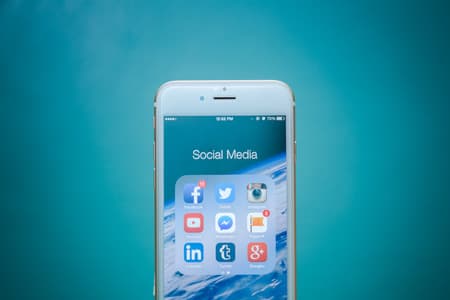
Practical social media campaign examples for businesses that prioritise revenue, attribution accuracy, and measurable funnel lift.

Image via 123RF
Fill out the form below and our team will get back to you within 24 hours
Discover what makes us different
Meta Business Partner running paid social across every major platform.
Audience targeting that reaches actual buyers, not just cheap impressions.
Clients see up to 45% lower cost per lead after we restructure their accounts.
In-house creative paired with reporting that proves what each rand returned.
Here's what sets us apart from the competition
Find answers to common questions
Implement server-side event collection, consistent UTM tagging, cross-domain tracking and order-level reconciliation to match platform events with backend purchase records, then use cohort reconciliation to surface persistent attribution differences.
Run structured A/B tests that isolate creative from audience, use defined learning windows to identify top performers, and promote winning creatives into scaled funnels while monitoring conversion metrics and unit economics rather than engagement alone.
Start with hypothesis-driven test budgets, scale incrementally for ad sets that meet your CAC and margin targets, reallocate spend toward channels that improve MER, and continuously optimize bids and audiences to preserve unit economics.
Combine server-side tracking (GTM server or conversion APIs), GA4 ecommerce measurement, stable UTM parameters and backend order ingestion so ad events map to purchases; apply multi-touch or data-driven attribution and evaluate performance against MER and LTV.
When integrated with CRO, retention strategies, LTV measurement and accurate attribution, social media ads can feed a scalable growth system that acquires customers at sustainable CAC and supports long-term profitability rather than one-off sales.
In This Article
Funnel-first campaigns
Tracking parity
US compliance focus
Social media campaign examples for businesses help teams move from inspiration to execution faster. Rather than chasing vanity metrics, high-performing campaigns focus on revenue impact, CAC, and clean attribution. Below you'll find campaign templates mapped to funnel stages (TOF → MOF → BOF), tracking recommendations, and US-specific compliance considerations.
Objective: drive first 30 days of sales for a new SKU on Shopify. Channels: Meta and TikTok for TOF video, Google Performance Max for coverage, and a dedicated landing page for the launch. Creative: 15-30s demo clips, two testimonials, and a product benefit carousel.
Tracking essentials: map page_view, add_to_cart, and purchase to GA4 and server-side events. Use postback attribution to reconcile platform-reported conversions with backend order records. For stores processing $5,000-$50,000 in monthly revenue during a launch, expect early CACs to be higher; plan a phased creative and bid test across 14-21 days.
Objective: generate qualified demo requests and reduce time-to-revenue. Channels: LinkedIn Sponsored Content for TOF, Meta retargeting for MOF, and email automation via a CRM (e.g., HubSpot). Creative: industry-case studies and client ROI snapshots tailored to role-based audiences (CMO, Head of Growth).
Measurement: track form_submitted, qualified_lead, and closed_won events in CRM. Use UTM tagging, server-side conversion forwarding, and an attribution model that credits touchpoints fairly during the 30-90 day sales cycle. See how strategy aligns with our approach on Prebo Digital services for campaign orchestration.
| Funnel Stage | Primary Events | Platforms |
|---|---|---|
| TOF | view_item, lead | Meta, TikTok, LinkedIn |
| MOF | add_to_cart, demo_booked | Google, Meta |
| BOF | purchase, subscription_start | Server-side + GA4 |
Tip: map each ad creative to a single primary conversion that feeds both GA4 and your server-side endpoint. This keeps attribution clean and simplifies funnel testing.
For additional context on Prebo Digital's revenue-focused methodology and technical approach, explore our homepage. These examples assume US ad platforms and merchant flows common to Shopify and WooCommerce stores.
Across the campaign examples for businesses, three execution patterns recur: creative sequencing, data-first audiences, and measurement parity across client and platform data. Creative sequencing means running TOF awareness clips, followed by MOF social proof, then BOF offers. Audience layering combines broad interest signals with first-party retargeting lists and lookalikes built from purchase data.
When running social media campaigns for businesses in the United States, account for cookie consent, CCPA disclosures for California residents, and platform pixel restrictions. Server-side tracking can reduce signal loss from browser restrictions, but you should document what data is collected and provide opt-out links on-site.
If a Shopify store averages $80 order value and acquires customers at a $40 CAC during a product launch, a 10% increase in on-site conversion rate (measured after implementing server-side events) could translate to an incremental ~$8 per order - shifting monthly revenue by several thousand dollars depending on volume. These figures are illustrative; run your own cohort tests to validate.
These examples are aligned with a strategy-first approach used by technical growth teams. If you want a compact framework that maps creative, funnel stage, and measurement into a repeatable plan, see how our structured approach pairs with technical builds on the About Us page. For teams ready to operationalise campaigns, request implementation details through the contact page.
Here's what sets us apart
Don't just take our word for it
Keep reading
Speak with our social media advertising experts. Free social media ads audit & strategy.
Get Free Social Audit