Fill out the form below and our team will get back to you within 24 hours
Discover what makes us different
Clients average a 200% lift in organic traffic, with some accounts closer to 350%.
We target the commercial keywords that put your business on page one of Google.
Half a decade of South African search campaigns behind every strategy we build.
Google Premier Partner status, verified and maintained since 2022.
Here's what sets us apart from the competition
Find answers to common questions
Key technical work includes improving site speed and render performance, implementing structured data and canonicalization, fixing crawl and index issues, and deploying server-side tracking and clean sitemaps tailored to Shopify or WooCommerce setups.
Accurate measurement uses GA4, Google Tag Manager, server-side tracking, and cohort or MER analyses to link organic sessions to revenue while accounting for assisted conversions and cross-channel attribution.
Timeline varies with competition and technical debt but measurable improvements are commonly seen in 3-12 months; early technical fixes and targeting low-competition, high-intent pages can yield faster, incremental wins while longer-term content and authority work compounds over time.
SEO should feed keyword intent and high-converting landing pages into paid campaigns while CRO testing optimizes those pages for higher conversion rates, creating a system where attribution and data flow inform budget and creative decisions for profit-focused growth.
SEO drives revenue by targeting high-intent queries, improving landing-page conversion rates, and reducing acquisition cost over time; technical and content work increases qualified organic traffic that converts into repeat customers and predictable revenue streams.
In This Article
Engagement-first SEO
Measure reliably
Test and scale
SEO optimization strategies for driving website engagement shift the goal from raw traffic to meaningful visitor actions: longer sessions, higher page depth, more micro-conversions, and improved lifetime value. For US founders, marketing directors, and eCommerce teams, engagement is the bridge between acquisition cost (CAC) and long-term profitability. This article outlines tactical, analytics-backed approaches that align search visibility with funnel performance.
Start by mapping which engagement metrics correlate with purchase intent for your business: session duration, pages per session, add-to-cart rate, email signups, content interactions, or product detail views. Prioritise metrics that feed into revenue models and attribution. Document these KPIs in your analytics property and test them against revenue in a 30-90 day window to confirm correlation.
If you need a strategic baseline for architectures that drive engagement, review services and capabilities on the Prebo Digital services page: Prebo Digital services. For agency approach and values that emphasise measurable outcomes, our homepage describes our methodology: Prebo Digital homepage.
Create interlinked content that maps to the funnel: TOF (top-of-funnel) informational pages, MOF (mid-funnel) comparison and product-benefit pages, and BOF (bottom-funnel) product pages with clear micro-conversions. Use internal anchor links, contextual CTAs, and recommended content modules to guide visitors deeper without interrupting the user experience.
Optimize titles, meta descriptions, and H2/H3 structure to match user intent. For engagement, favor rich snippets and answer boxes that encourage clicks from high-intent queries. Use structured data (schema.org) for articles, products, FAQs, and reviews to increase SERP relevance and create expectation-consistent landing experiences.
Quick consideration: Improving organic CTR without improving on-page content can increase bounce rates. Pair SERP optimization with page-level experience improvements to convert the extra clicks into deeper engagement.
Instrumentation is critical. Use GA4 with server-side tagging or Google Tag Manager to collect consistent event data (scrolls, plays, clicks). Aggregate engagement events into a single engagement score for A/B testing and attribution. When you model outcomes for US audiences, ensure data residency and consent flows respect CCPA requirements for California users.
Below is a simple funnel breakdown and a conversion-tracking diagram that maps SEO-driven pages to measurable engagement outcomes. Use this to plan content and measurement before production.
| Funnel Stage | Page Type / Example | Key Engagement Metric |
|---|---|---|
| TOF | How-to articles, guides | Time on page, scroll depth |
| MOF | Comparisons, case studies | Engaged events, email signups |
| BOF | Product pages, demo bookings | Add-to-cart, demo requests |
Implement a cycle of Strategy → Build → Test → Scale → Report. Start with a hypothesis tied to engagement: for example, "Adding an in-article product carousel will increase pages-per-session by 10-20% among US visitors." Instrument the change with GA4 events and run an A/B test for at least 4 weeks or 1,000 sessions per variant, whichever comes later.
To demonstrate ROI, map engagement cohorts to downstream revenue: assign users to cohorts by engagement score and measure 30-90 day conversion or average order value. For US eCommerce merchants, this often reveals that a top 20% engaged cohort drives a disproportionate share of repeat purchases. Use server-side event stitching to reduce attribution loss from browser restrictions.
Design topic clusters where pillar pages link to supporting articles and product pages. Internal links should use descriptive anchor text that aligns with search intent to help users and search engines navigate. Monitor the performance of these clusters in Search Console and GA4 to iterate on poor-performing nodes.
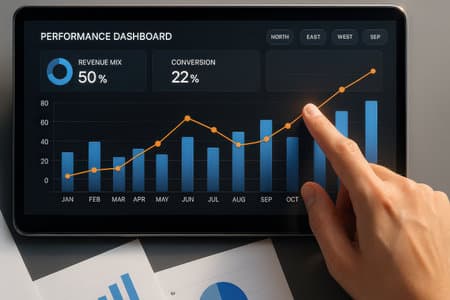
Create a dashboard that blends organic acquisition with engagement KPIs and revenue outcomes. Use attribution models (data-driven where available) to understand contribution. For US teams, include cost metrics if you combine organic SEO with paid promotion. Track changes over a 90-day window to account for seasonality and indexing delays.
If you want to explore how a technical-first, analytics-driven team applies these SEO optimization strategies for driving website engagement to Shopify or WooCommerce stores, our About page describes the agency approach and case studies: About Prebo Digital. For specific tracking or growth conversations, you can request a tailored review via the contact page: Contact Prebo Digital.
A mid-size US Shopify brand implemented these steps: improved page speed (reducing LCP by ~1.2s), added related-content modules, and instrumented scroll and click events server-side. Over three months, the engaged cohort (top 25% by engagement score) showed an estimated 18% higher repeat purchase rate. These are illustrative outcomes; actual results vary by vertical and baseline performance.
Here's what sets us apart
Don't just take our word for it
Keep reading
Speak with our SEO specialists to boost your rankings. Free comprehensive SEO audit (worth R2,500).
Get Free SEO Audit