Fill out the form below and our team will get back to you within 24 hours
Discover what makes us different
Our average client sees a 35% lift in conversion rate across 150+ CRO projects.
500+ tests run across landing pages, checkouts and lead capture forms.
Every change is backed by analytics, heatmaps and real session data.
Certified VWO partners running enterprise-grade experimentation programmes.
Here's what sets us apart from the competition
Find answers to common questions
Prebo integrates CRO work with GA4, Google Tag Manager, server-side tracking, and common ecommerce platforms like Shopify and WordPress to ensure accurate event capture and attribution. We also set up ETL or data-layer solutions where needed so test results feed into a single source of truth for decision making.
Common experiments include A/B tests, multivariate tests, funnel experiments, UX and checkout performance optimizations, and technical fixes that reduce friction. Test duration depends on traffic volume and required statistical power but typically ranges from several weeks to a few months per experiment cycle.
We prioritise revenue-per-visitor, conversion rate, average order value, customer acquisition cost (CAC), lifetime value (LTV), and marketing efficiency ratio (MER), alongside statistical significance for experiments. Clean attribution and centralized data pipelines ensure those metrics reflect true business impact rather than platform-reported figures.
CRO is designed to improve conversion efficiency and attribution accuracy, which can increase revenue and profitability when combined with product-market fit and adequate traffic. Outcomes vary by business and depend on test quality, funnel issues identified, and downstream economics, so results are not assured and are measured against revenue-focused KPIs rather than vanity metrics.
CRO is the systematic process of improving a website or funnel to increase revenue per visitor. Prebo Digital uses a technical-first, analytics-driven approach with hypothesis-driven experiments, server-side tracking, and funnel-level optimization focused on measurable revenue outcomes.
In This Article
Align intent and pages
Measure revenue, not sessions
Test with purpose
When asking how does SEO and conversion optimisation work together, the question is about more than higher rankings or increased traffic. It is about combining organic acquisition signals with funnel-level experimentation to move more qualified visitors into revenue. SEO builds predictable, high-intent volume from search engines; conversion optimisation (CRO) turns that organic volume into measurable $ revenue by improving on-site experiences, measurement, and attribution.
For US founders and marketing leads the metric of interest is not sessions but profit-adjusted revenue metrics (LTV, CAC, MER). When SEO and conversion optimisation work together you reduce wasted acquisition spend, shorten sales cycles, and increase lifetime value by matching landing experiences to search intent and tracking true conversion impact.
A structured approach combines four technical and strategic layers: keyword-intent mapping, landing experience design, measurement & attribution, and iterative experimentation. Each layer has both SEO and CRO responsibilities - for example, keyword intent steers on-page copy and test hypotheses; measurement ensures search-driven conversions are attributed correctly.
Note: when planning tests, use US-specific search volume and user behaviour as the baseline. Values and estimates should be modelled in $USD and validated against GA4/server-side event data.
Break the funnel into Top-Of-Funnel (TOF), Middle-Of-Funnel (MOF), and Bottom-Of-Funnel (BOF). Map keywords and landing pages to those stages and design conversion goals accordingly.
| Stage | SEO focus | CRO focus |
|---|---|---|
| TOF | Informational keywords, content depth, internal linking | Engagement metrics, content CTAs, lead magnets |
| MOF | Comparisons, product category pages, schema | Social proof, pricing clarity, value proposition testing |
| BOF | Transactional keywords, local intent, structured data | Checkout flow, form optimisation, payment UX |
A minimal tracking model for SEO + CRO includes server-side pageview processing, GA4 event collection, ad platform click IDs, and a central attribution layer that maps search visits to revenue events. Below is a simplified flow:
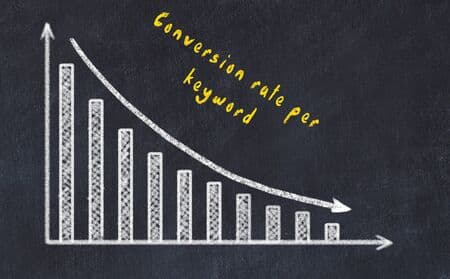
User search → Organic click → Server-side pageview (captures UTM & user fingerprint) → GA4 event (purchase/lead) → Attribution layer ties purchase back to landing keyword → CRO test reports adjusted conversion rate by keyword segment.
To see how measurement fits into a full growth system, review Prebo Digital’s services overview which outlines tracking and optimisation capabilities for eCommerce and B2B sites.
For an agency perspective on aligning strategy and execution, learn about the agency approach on the Prebo Digital homepage.
When answering how does SEO and conversion optimisation work together in practice, follow a repeatable cycle. Start with a strategy session to map business KPIs (CAC, LTV, MER) to funnel stages. Build with technically-sound SEO and conversion foundations. Test using statistically-sound experiments. Scale winners and report using clean attribution.
Prioritise keywords by intent and expected value. Example: a Shopify store with an average order value (AOV) of $80 and 10,000 monthly organic sessions for a product category - a 1% conversion lift on BOF pages could translate to roughly $8,000 incremental monthly revenue (estimate). Model outcomes in $USD and treat numbers as scenario estimates before testing.
If you want an example of how an agency implements both technical tracking and optimisation, see Prebo Digital’s approach on the About Prebo Digital page for team and process context.
Good test ideas come from keyword intent + on-site behaviour. Examples:
Winners should be scaled across similar keyword clusters and page templates. Use a central attribution layer that reconciles GA4, server-side events, and platform click data so growth reports show real revenue impact - not just platform-reported conversions. When reporting to stakeholders, translate percentage lifts into $ impact and CAC changes for clear decision-making.
If you want a practical walkthrough of aligning SEO and CRO in a growth retainer or campaign, explore how an integrated service model looks on the services overview. See a real-world example by mapping a content landing page to a revenue experiment and monitoring results through server-side GA4 events.
| Metric | Why it matters |
|---|---|
| Attributed revenue ($) | Shows direct business impact of organic+on-site changes |
| CAC / MER | Demonstrates cost-efficiency and cross-channel contribution |
| Conversion rate by keyword segment | Highlights intent-driven optimisation opportunities |
When you understand how does SEO and conversion optimisation work together, you shift from isolated tactics to a repeatable growth system: acquisition that knows its value, pages that are designed to convert, and measurement that attributes revenue cleanly. This alignment is especially valuable for US-based Shopify and WooCommerce stores, B2B SaaS funnels, and performance-first marketing teams seeking profitable scale.
Here's what sets us apart
Don't just take our word for it
Keep reading
Speak with our conversion optimization experts. Free conversion audit & optimization plan.
Get Free CRO Analysis